Everyday photography
Best EDC fixed-lens cameras: a practical used buying guide
A fixed-lens camera has a built-in lens you cannot swap. That includes both single-focal-length cameras and compact cameras with a built-in zoom. The best EDC choice depends on what you want to photograph and how much camera you’ll carry.
The quick answer
Best pocket fixed-lens pick: Ricoh GR IV for its 28mm-equivalent view and pocketable APS-C body. Choose the older GR IIIx if you specifically prefer its 40mm-equivalent view. Best EDC zoom: Sony RX100 VII for reach in one compact camera. Best 35mm-equivalent choice for a strap or small bag: Fujifilm X100VI.
These are use-case picks based on published specifications and editorial judgment, not a hands-on comparative test. If you want one default answer for a pocket-first EDC, start with the Ricoh GR IV.
Prefer a camera with a lens you can change? Read our EDC interchangeable-lens camera and lens guide →
1. Decide where it will live
“Small” only means something in relation to your day. A camera that fits a jacket may be awkward in summer trousers. A compact body with a large lens is still a large thing to carry.
Before ordering, handle or rent your shortlist if possible. Check whether you can switch it on, change exposure, and take a picture comfortably with the way you normally carry it.
2. Choose the built-in lens that fits your day
All focal lengths below are 35mm equivalents, which makes cameras with different sensor sizes easier to compare. A fixed lens can be a prime or a zoom; “fixed” means it stays attached to the camera.
- 28mm: a wide view for streets, interiors, and people in their surroundings. It is the GR IV’s built-in view.
- 35–40mm: a natural-feeling everyday angle for details and general scenes. The X100VI is 35mm; the GR IIIx is 40mm.
- 24–200mm zoom: the RX100 VII covers wide scenes and distant details without changing lenses. Its lens is f/2.8–4.5, so it gets slower as you zoom in.
Choose one focal length if you enjoy moving to frame a picture and want a simple pocket camera. Choose a built-in zoom if you often cannot move closer. For moving people indoors, stabilization helps with camera shake, while subject motion still needs a suitable shutter speed.
3. Best EDC fixed-lens cameras by use
These are distinct ways to carry one camera every day: a pocket prime, a versatile built-in zoom, or a larger 35mm-equivalent camera for strap carry.
Ricoh GR IV / GR IIIx
Best pocket fixed-lens cameraThe GR IV is the newer 28mm-equivalent option, with a 25.74-megapixel APS-C sensor, f/2.8 lens, and ready-to-shoot weight of approximately 262g. Ricoh rates it for about 250 shots under CIPA testing. The older GR IIIx keeps the same approximate 262g carry weight but gives you a tighter 40mm-equivalent f/2.8 view; its CIPA rating is about 200 shots. Battery life varies with use. GR IV specifications · GR III/IIIx specifications.
Choose the GR IV if: you want the newest 28mm pocket option. Choose the GR IIIx if: you prefer 40mm and are shopping older used stock. Think twice if: you regularly need a zoom. Check whether a listing is the standard or HDF version.
Browse used listings
Sony RX100 VII
Best EDC fixed-lens zoomIts 1.0-type sensor, 24–200mm-equivalent f/2.8–4.5 zoom, and approximately 302g ready-to-shoot weight make it worth considering when framing flexibility matters. The aperture becomes smaller toward the long end. Sony specifications.
Choose it if: you want wide scenes and distant details without changing lenses. Think twice if: you prefer a bigger grip and larger controls. Check handling in person, and test the zoom and lens extension when buying used.
Browse used listings
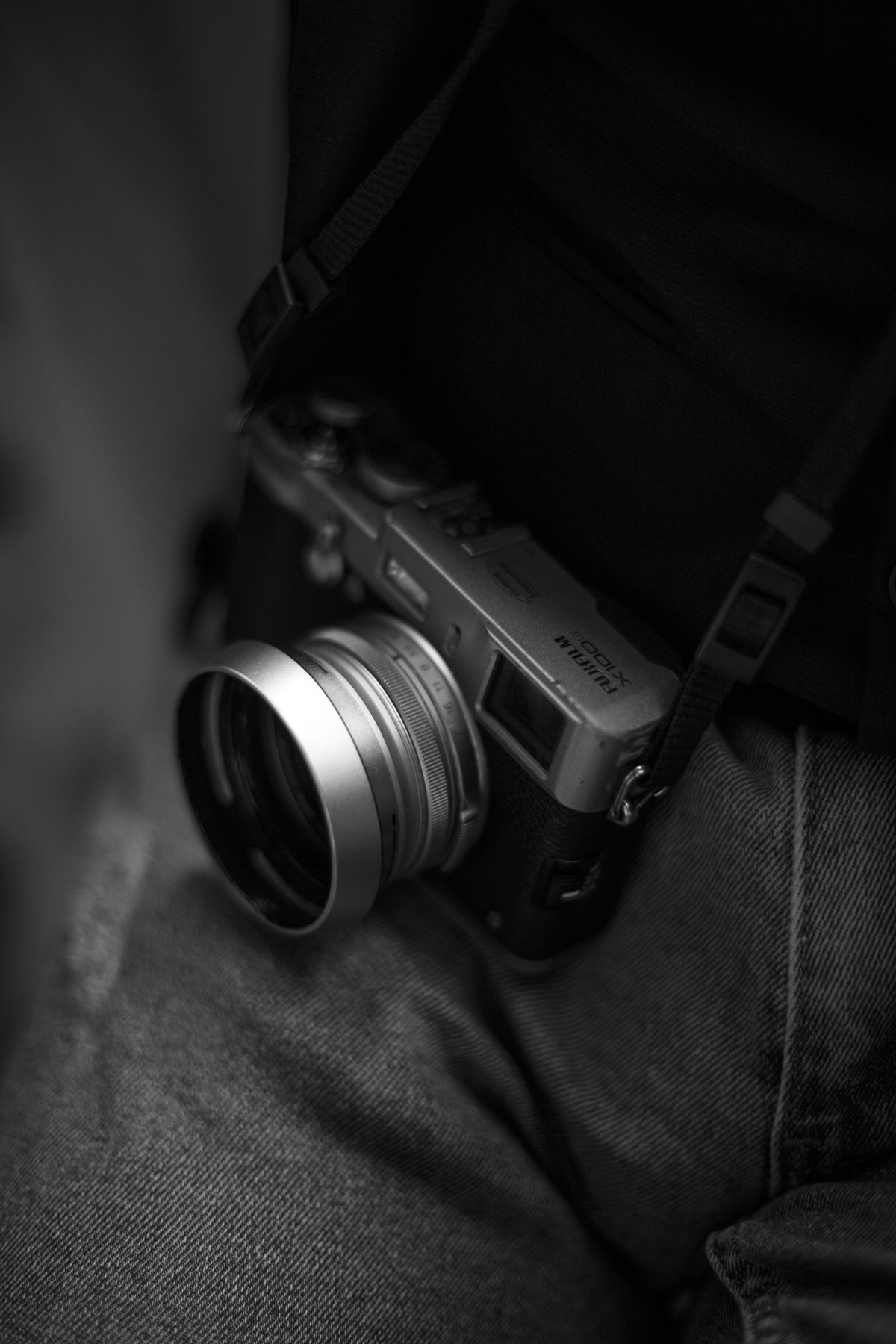
Fujifilm X100VI
Best 35mm choice for strap carryThe X100VI pairs an APS-C sensor with a fixed 35mm-equivalent f/2 lens and weighs approximately 521g with battery and memory card. It offers a viewfinder and asks for more carry space than the pocket compacts above. Fujifilm specifications.
Choose it if: a fixed 35mm view, built-in viewfinder, and strap carry fit your routine. Think twice if: pocketability or zoom reach is essential. The older X100V may cost less used; compare its condition and price against the X100VI.
Browse used listings
Searches may include other generations, variants, or bundles. Confirm the exact model and included equipment with the seller. These are asking prices, not completed-sale values. The X100V is an older alternative; compare its condition and price with the X100VI before buying.
4. Inspect the used camera, not just its listing
For an EDC camera, cosmetic wear can be acceptable. Unreliable controls or a lens that sometimes refuses to extend are much harder to live with. Ask for evidence of normal operation.
- Confirm identity and condition. Ask for current photos of the actual camera, its model marking, lens, screen, battery compartment, and ports. Ask about drops, liquid exposure, repairs, and any intermittent faults.
- Check the lens and images. Request full-resolution sample files, including a detailed scene and a plain bright surface at a small aperture. Look for persistent spots, unusual softness on one side, or marks that repeat across images. A sample is a screening tool, not a guarantee of condition.
- Exercise the moving parts. Power the camera on and off several times. Test focus near and far, zoom through its range where fitted, and check buttons, dials, touch controls, screen hinges, and viewfinder mechanisms where present.
- Test the whole shooting cycle. Take several pictures, play them back, write to a compatible card, and check charging with the correct equipment. Check battery health, door latches, and whether the battery is swollen; don’t keep using a swollen battery.
- Compare the complete cost. Include shipping, tax, a usable battery and charging setup, memory card, and any needed accessories. Confirm the seller’s stated return terms and what happens if the camera arrives faulty.
If you cannot inspect it, ask the seller to demonstrate the checks in a short current video. “Untested” leaves those questions unanswered; don’t treat it as equivalent to a working example.
5. Make the final decision simple
Choose first between pocketability and zoom range. Pick the GR IV for a wide pocket view, the GR IIIx for a tighter used option, the RX100 VII for zoom reach, or the X100VI if a 35mm view and strap carry suit you. Then compare condition, included accessories, and seller terms within your budget.
For the first month, keep the kit small: one camera, one lens if needed, a strap, and a charged battery. If you reach for it on a routine errand, it is doing its job.
Browse used fixed-lens camera listings →