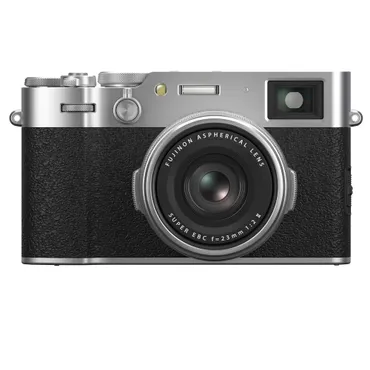
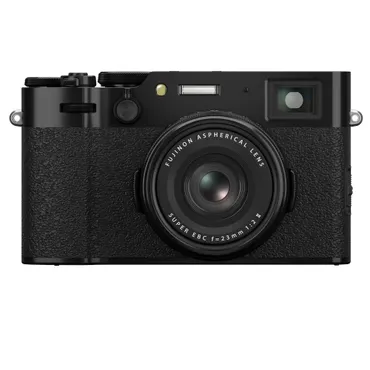
Choose the VI for its actual features
The X100VI combines a high-resolution sensor with stabilization and a hybrid optical/electronic viewfinder. Those features can matter for everyday photography, but they do not make the lens interchangeable. Compare it with the X100V if the newer features are not important to you, and keep those generations separate when judging used prices.
Inspect both ways of composing
Test the optical and electronic viewfinder modes, rear display and focus controls. Ask for a sequence of photographs from close distance to infinity, with a plain-surface frame as well as a detailed scene. Check the lens front, focus ring, aperture ring and switches. If possible, compare stabilized and unstabilized results yourself rather than relying on a description.
Confirm exactly what the package contains
List the battery, cap, strap, adapter ring, hood and filter separately. Fujifilm specifies an adapter ring and protection filter for weather resistance; do not assume a bare used camera includes that arrangement. Conversion lenses and decorative accessories should be identified individually, especially when they help explain a higher asking price.
Treat the listing price as a proposal
Check current offers and the manufacturer’s current price before accepting a seller’s premium. Shipping, tax and return rights can change the value of a seemingly cheaper offer. A special edition is a different comparison, while a box alone is not proof of careful use. Ask the seller to demonstrate the specific camera and provide an image made recently.
Feature references checked against the linked manufacturer documentation. Inspection advice and recommendations are editorial; this is not a hands-on test.
Fujifilm X100VI specifications ↗Fujifilm X100VI introduction ↗Fujifilm X100VI weather-resistance accessories ↗